Meet the Meteorologist
What's your favorite weather phenomena?
What got you interested in the weather?
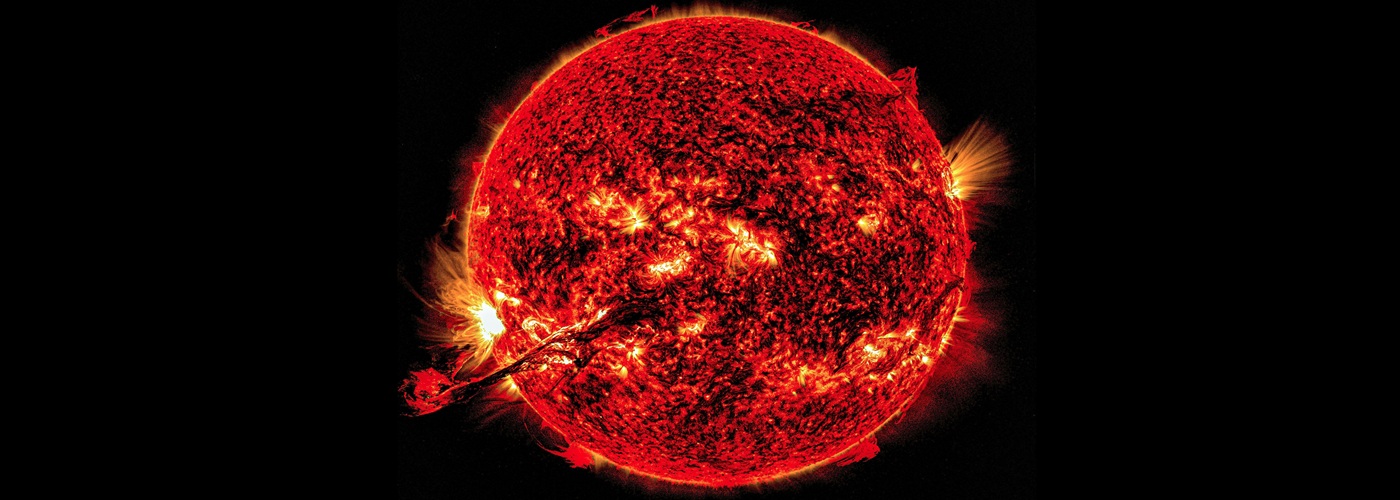

Most of what scientists know about the Sun comes from a single, limited viewpoint: the ecliptic plane, where Earth and the planets orbit. From that angle, the Sun’s polar regions remain largely hidden. Yet these high-latitude zones play an outsized role in shaping solar behavior. Their magnetic fields help set the stage for each new solar cycle, feed the fast solar wind, and influence how solar storms propagate through the solar system.
Although the poles appear calm compared to the Sun’s active mid-latitudes, they are central to the solar dynamo, the process that drives the roughly 11-year cycle of sunspots and magnetic reversals. Observations and models disagree on how magnetic flux and internal flows behave near the poles, leaving major uncertainties in predictions of future solar activity. The poles are also the primary source of the fast solar wind, a persistent stream of charged particles that fills much of interplanetary space and shapes space weather conditions near Earth.
The Solar Polar-orbit Observatory (SPO), planned for launch in 2029, is designed to overcome these long-standing observational gaps. Using a gravity assist from Jupiter, SPO will tilt its orbit far out of the ecliptic, eventually reaching inclinations of up to 75–80 degrees. From this vantage, it will repeatedly pass over both solar poles during a mission lasting up to 15 years, spanning solar minimum and maximum.
SPO will carry a powerful suite of instruments to image polar magnetic fields, track coronal activity, and directly sample the solar wind above the poles. Working alongside other solar missions, it will provide near-global coverage of the Sun for the first time.
By revealing how polar magnetic fields evolve, how the fast solar wind is launched, and how solar storms spread through space, SPO promises major advances in solar physics and more reliable space weather forecasts that protect satellites, power grids, and modern technology.

 Paul Trambley
 Derek Heit
 Jennifer Wojcicki
 Laura Lockwood
 Ray Miller