Meet the Meteorologist
What's your favorite weather phenomena?
What got you interested in the weather?
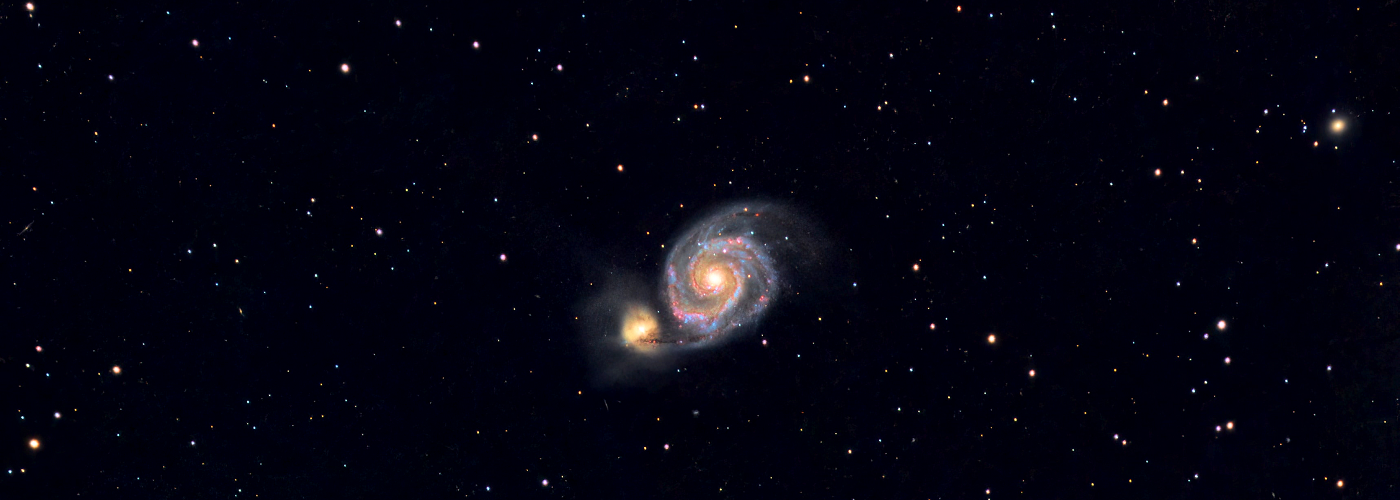

NASA’s Nancy Grace Roman Space Telescope is set to transform astronomy by surveying enormous regions of the universe far faster than previous observatories. While the James Webb Space Telescope examines relatively small areas in extraordinary detail, Roman will cover fields about 100 times larger than Hubble’s, potentially surveying the entire sky at comparable resolution.
The combination of Roman and Webb could be especially powerful. Roman will identify distant galaxies, rare cosmic events, and potentially undiscovered planets, while Webb can then study selected targets in much greater detail. Both telescopes’ infrared capabilities will allow scientists to investigate objects hidden by dust and the earliest stages of cosmic evolution.
A major goal is understanding dark matter and dark energy, which together account for most of the universe. University of Arizona researchers will contribute through techniques such as kinematic lensing, which combines Roman’s images with spectroscopic data to investigate how matter is distributed and how the universe has expanded.
Roman will also advance exoplanet science through its Coronagraph Instrument, which blocks a star’s intense glare so faint planets can be directly observed. The technology could detect worlds roughly 100 million times fainter than their stars and help pave the way for future telescopes designed to search for potentially habitable planets and signs of life.
University of Arizona scientists will also use Roman to study planetary atmospheres, galaxy formation, supermassive black holes, gravitational lenses, cosmic dust, and reionization.
By combining an enormous field of view with sensitive infrared observations, Roman promises to provide a sweeping new perspective on the cosmos, complementing Webb’s detailed observations and opening new paths toward understanding how the universe and its countless worlds came to be.






 Paul Trambley
 Derek Heit
 Jennifer Wojcicki
 Laura Lockwood
 Ray Miller